
STEM Water Activities for Preschoolers

STEM water activities for preschoolers are one of the easiest ways to bring hands-on science, technology, engineering, and math into your day. Water is inexpensive, endlessly engaging, and perfect for little learners who need to explore, predict, test, and discover through play. From sink-or-float experiments to simple engineering challenges, these STEM activities for preschoolers make learning feel like fun.
Whether you’re planning a summer water theme, a weather unit, or just looking for everyday science activities, this collection of water-based STEM ideas has you covered.

What Are STEM Water Activities for Preschoolers?
STEM water activities for preschoolers are hands-on experiments and play-based challenges that use water to teach science, technology, engineering, and math concepts. Activities like sink-or-float tests, water pouring stations, and simple building challenges help young children observe, predict, and problem-solve in ways that feel natural and fun.
Water Science Activities for Preschoolers.
Water science activities give preschoolers a simple, low-prep way to start thinking like scientists. Pouring, splashing, and experimenting with water naturally builds observation and prediction skills — core foundations of early science learning. These activities work equally well in the classroom or at home with supplies you already have on hand.
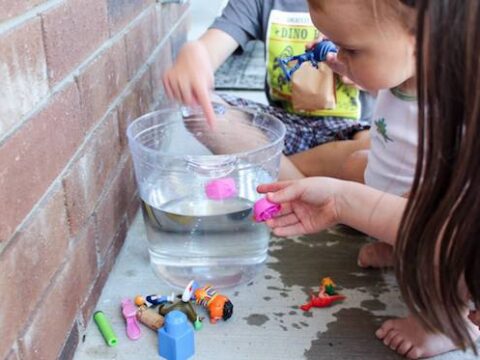
This classic physics activity invites preschoolers to predict whether everyday objects will sink or float before testing them in water.
Simple to set up with items from around the house, it builds early science skills like observation, prediction, and critical thinking.
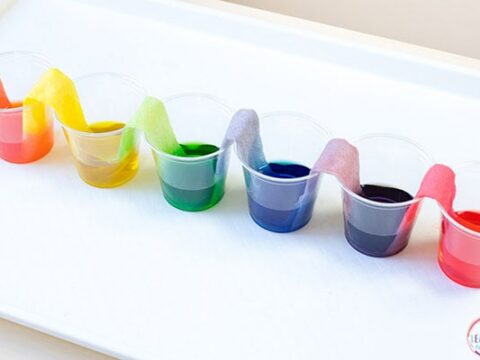
Preschoolers watch in amazement as colored water travels up paper towels from cup to cup, mixing to create new colors along the way.
This visually stunning experiment introduces absorption and color mixing while keeping little learners engaged from start to finish.
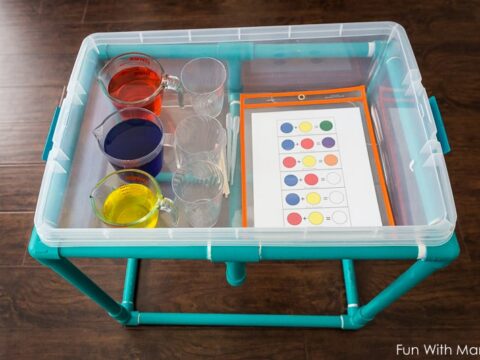
Preschoolers combine primary colors of water to discover what new colors they can make, using a recording sheet to track their results.
This sensory-friendly activity builds early science process skills while introducing basic color theory in a hands-on, low-mess way.

Preschoolers drop food coloring onto a layer of shaving cream floating on water and watch as the color slowly seeps through, mimicking how rain falls from clouds.
This visually captivating experiment introduces basic weather science in a way that feels like magic.
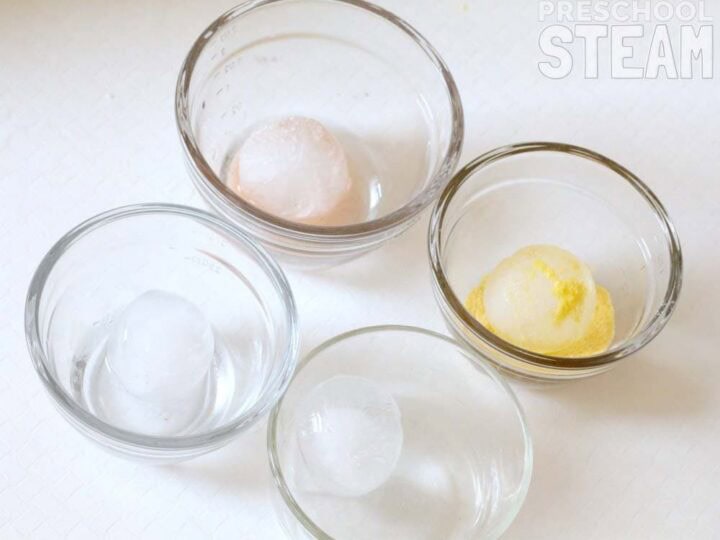
Preschoolers test different substances on ice to see which melts it fastest, building early science skills through hands-on observation and comparison.
This simple experiment introduces states of matter and the concept of variables in a way that is completely accessible for young learners.
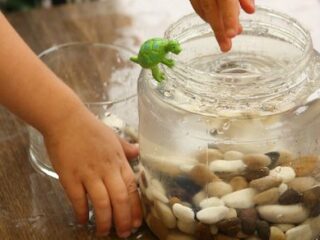
Preschoolers drop rocks and small objects into a jar of water and observe how the water level rises with each addition.
This beginner-friendly experiment introduces the concept of water displacement through direct, hands-on discovery that kids can see and measure in real time.
Water Engineering Activities for Preschoolers
Water engineering activities give preschoolers a chance to design, build, and problem-solve using one of their favorite materials. Constructing ramps, channels, and simple structures with water challenges kids to think critically and adjust their designs based on what they observe. These activities lay the groundwork for early engineering thinking in a way that feels like pure play.
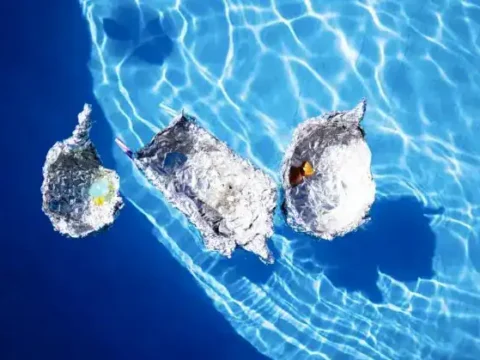
Preschoolers design and build small boats out of aluminum foil, then test how much weight their boats can hold before sinking.
This classic engineering challenge encourages planning, testing, and redesigning while introducing basic concepts of buoyancy and structural design.
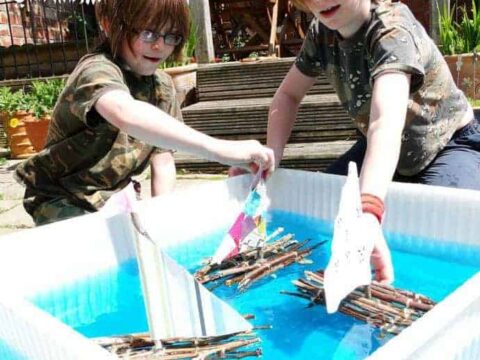
Preschoolers collect natural sticks and build their own rafts, then test whether they float in water.
This outdoor-friendly engineering activity encourages creative problem-solving and introduces basic concepts of buoyancy and construction using simple, nature-based materials.
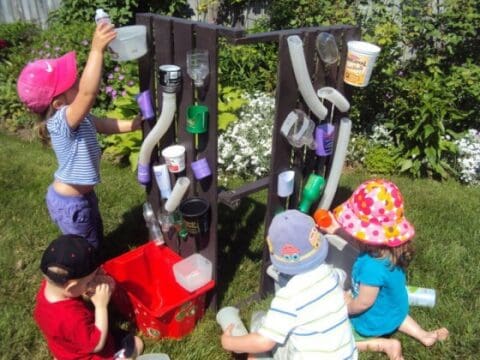
Preschoolers attach cups, bottles, and funnels to an outdoor fence or trellis to create a flowing water wall they can experiment with again and again.
This open-ended engineering activity builds spatial thinking and problem-solving as kids design and adjust their setup to control where the water flows.
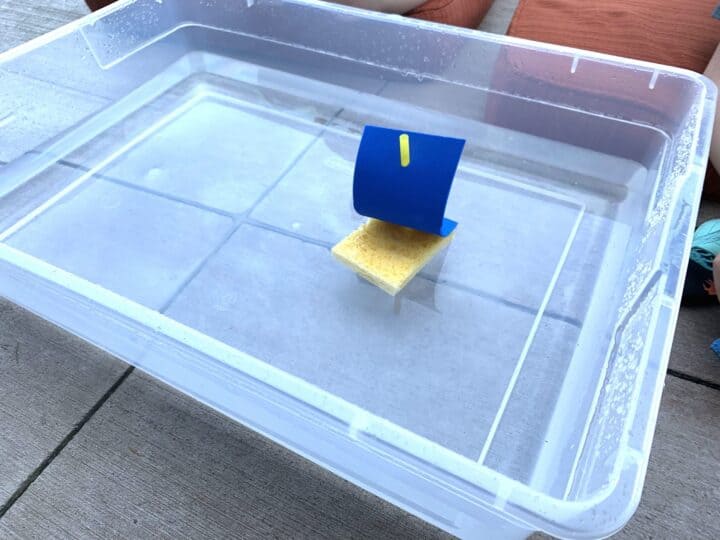
Preschoolers build simple boats using sponges and foam pieces, then test how well their designs float and move across the water.
This low-prep engineering activity is perfect for outdoor play and introduces basic boat design and buoyancy concepts using everyday materials.
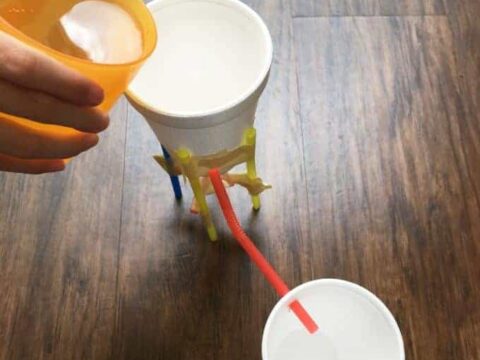
Preschoolers use straws, cups, and connectors to engineer a pipeline that moves water from one container to another.
This hands-on challenge builds early engineering skills as kids plan, test, and troubleshoot their designs to get the water flowing in the right direction.
Water Math and Measurement Activities
Water is a natural fit for early math learning because measuring, pouring, and comparing are already part of how preschoolers play with it. These water math and measurement activities build foundational skills like counting, comparing quantities, and understanding capacity in a completely hands-on way. Best of all, most of them require nothing more than a few cups, some water, and a curious kid.
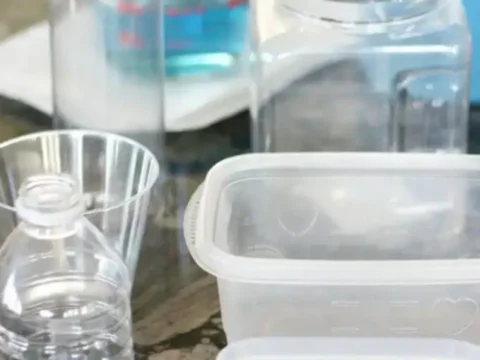
Preschoolers use a collection of different-sized containers to explore which holds more, less, or the same amount of water.
This simple measurement activity builds early math vocabulary like full, empty, more, and less while developing a foundational understanding of volume and capacity.
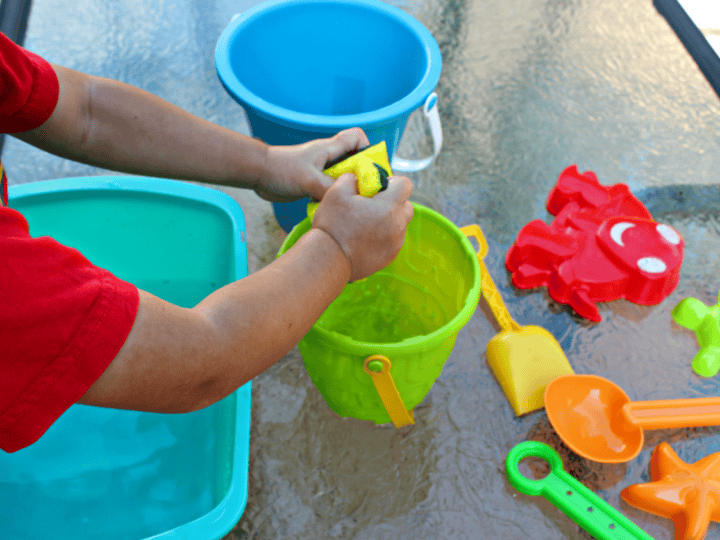
Preschoolers use sponges to transfer water from one bucket to another, counting squeezes and comparing water levels as they go.
This active math activity builds one-to-one correspondence and early measurement skills while keeping little learners fully engaged from start to finish.
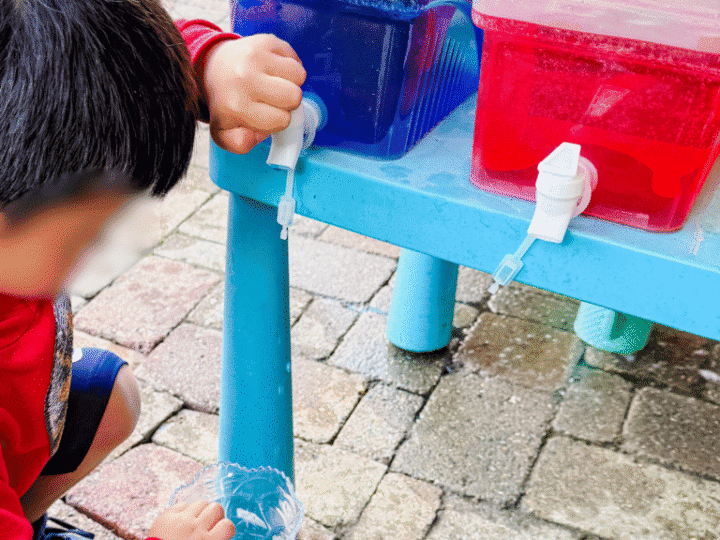
Preschoolers practice pouring colored water from dispensers into cups, building fine motor control while exploring early measurement and volume concepts.
This outdoor-friendly activity is as much about math as it is about coordination, giving kids meaningful repetition in a setup they will want to return to again and again.
Outdoor Water STEM Activities
Taking STEM learning outside adds a whole new dimension to water play. Fresh air, open space, and a little mess-tolerance go a long way when preschoolers are experimenting, building, and exploring with water. These outdoor water STEM activities are perfect for warm weather days when learning is best done on the grass, on the patio, or anywhere a splash is welcome.
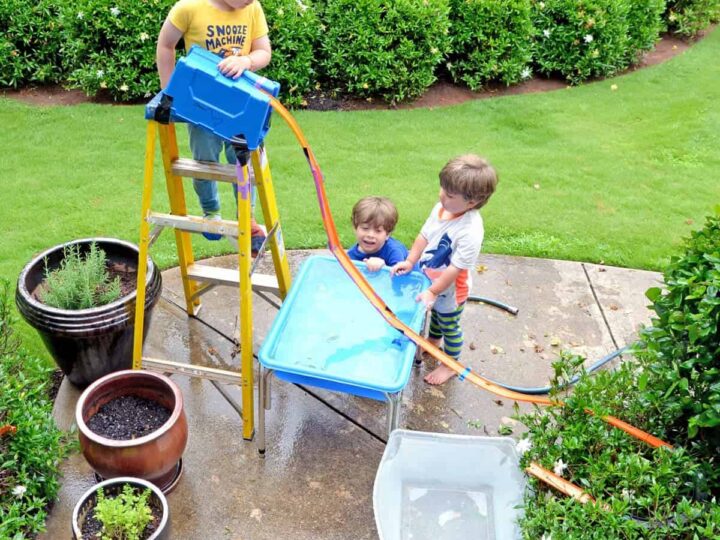
Preschoolers use toy car tracks to build ramps and channels that guide water from a raised container down into a bin below.
This backyard engineering challenge introduces concepts like gravity, slope, and water flow while giving kids a wildly fun reason to experiment and redesign.
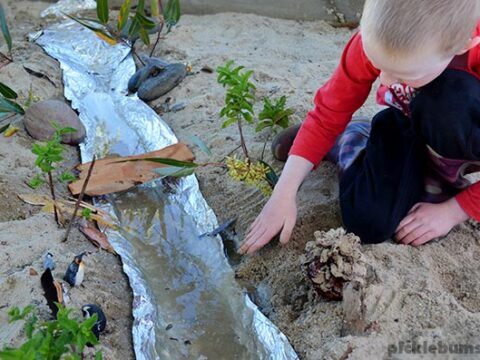
Preschoolers use sand, foil, rocks, and natural materials to build their own river, then pour water through it to see how it flows.
This imaginative outdoor activity introduces early earth science concepts like erosion and water movement while encouraging creative, open-ended play.
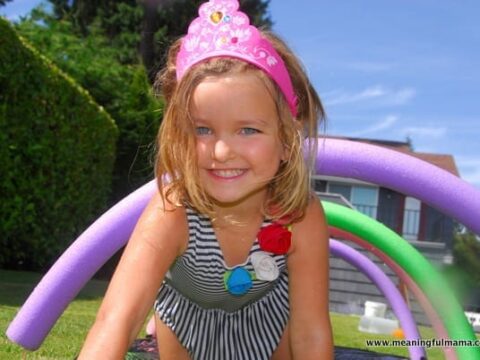
Preschoolers crawl, jump, and move through a backyard obstacle course built with pool noodles, sprinklers, and other water elements.
This active outdoor activity builds gross motor skills and spatial awareness while making summer STEM play feel like the best kind of adventure.
Tips for Setting Up Water STEM Activities
A little preparation goes a long way when water is involved. These simple tips will help your activities run smoothly and keep the focus on learning.
Contain the mess before you start. Lay down towels or place a plastic tray under your workspace to catch spills. This keeps cleanup quick and lets kids focus on the activity instead of the aftermath.
Ask for predictions first. Before diving in, ask your child what they think will happen. This one simple step builds scientific thinking habits that carry far beyond any single activity.
Keep your questions open-ended. Instead of asking yes or no questions, try “What do you notice?” or “What would happen if you tried it a different way?” This invites deeper thinking and keeps curiosity alive.
Let them lead the experiment. Resist the urge to correct or redirect. When preschoolers test their own ideas, even the ones that don’t work, they are doing real science.
Ditch the right answer. Water STEM activities are about exploration, not outcomes. The mess, the mistakes, and the unexpected results are all part of the process.

Water is one of the most powerful and accessible tools you have for bringing STEM learning to life with preschoolers. Whether you are setting up a simple sink-or-float experiment at the kitchen table or building a full water wall in the backyard, every activity on this list gives young learners a chance to think, explore, and discover in ways that feel completely natural.
Pick one activity that fits your space, your supplies, and your child’s current interests. You do not need to do them all at once. Start small, follow their curiosity, and let the learning flow from there.

Tara is the brains behind Homeschool Preschool, where her journey from preschool and public school teacher to homeschooling mom of three fuels her passion for early childhood education. With a blend of expertise and firsthand experience, Tara’s writings offer practical tips and engaging resources to support families in creating meaningful learning adventures at home.


