Owl Life Cycle Worksheet
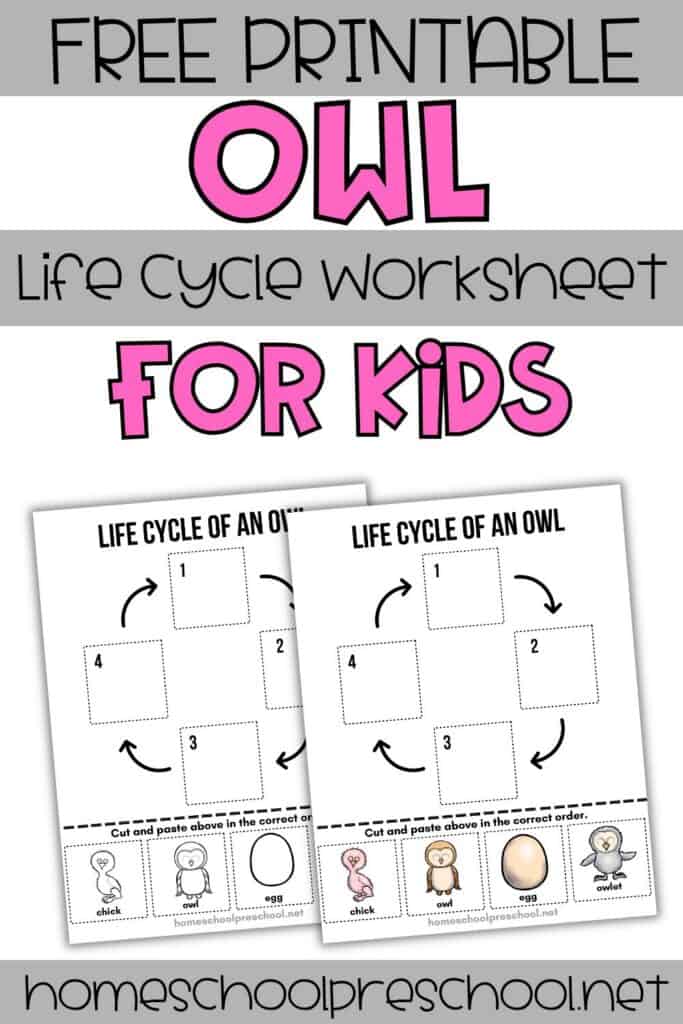
This owl life cycle worksheet gives preschoolers a simple, hands-on way to explore how an owl grows from an egg into an adult. With just four stages to sequence, it’s an easy addition to your animal life cycle preschool worksheets and a fun way to introduce early science concepts without a complicated lesson.
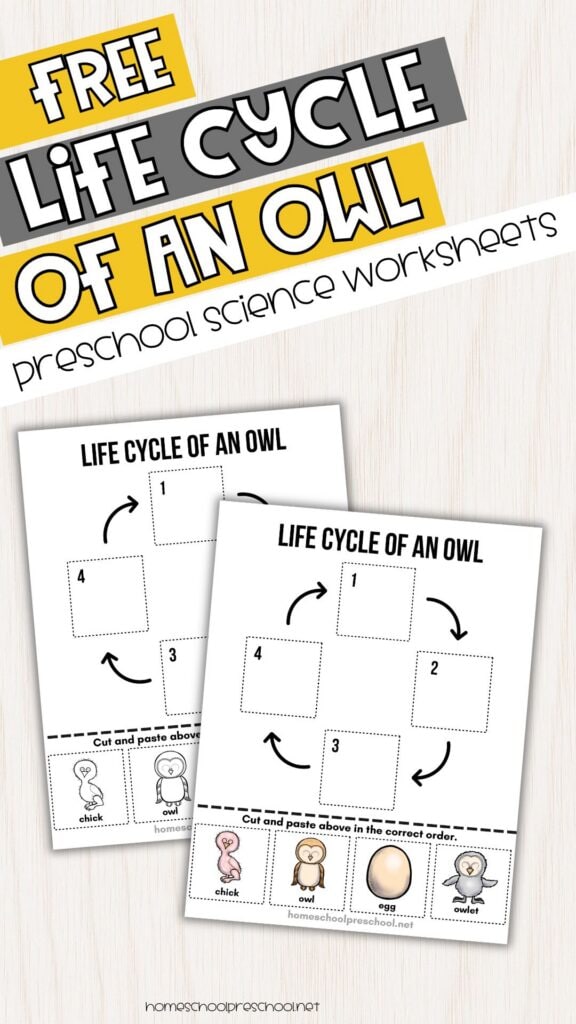
Children will cut out the pictures of the egg, chick, owlet, and adult owl, then place them in the correct order. Pair it with your favorite owl book or add it to your preschool life cycle activities for a simple science activity you can use today.
Owl Life Cycle Worksheet At a Glance
What it is: A cut-and-paste activity for sequencing the owl life cycle
Stages included: Egg, chick, owlet, and adult owl
Skills practiced: Sequencing, life cycle vocabulary, cutting, and fine motor skills
What you’ll need: Printed worksheet, scissors, and glue
Versions included: Color and black-and-white
Owl Life Cycle for Preschoolers
The owl life cycle has four simple stages: egg, chick, owlet, and adult owl. An owl begins its life inside an egg, hatches as a chick, grows into an owlet, and eventually becomes an adult owl.
- Egg: The owl begins its life inside an egg.
- Chick: A chick hatches from the egg.
- Owlet: The chick grows into a young owl called an owlet.
- Adult owl: The owlet continues growing until it becomes an adult owl.
These four stages give preschoolers a simple introduction to the idea that animals grow and change throughout their lives.
How to Use the Owl Life Cycle Worksheet
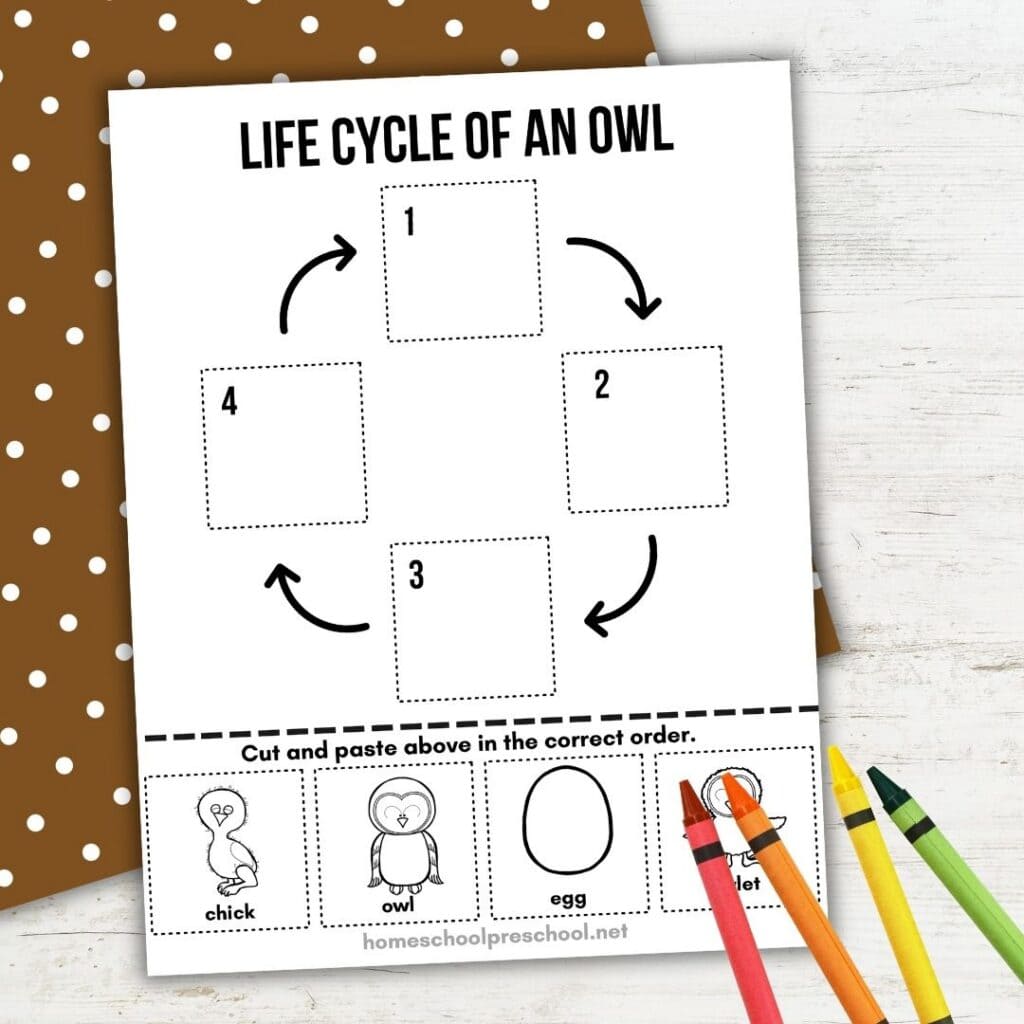
This activity is easy to add to your preschool day and requires very little prep. Print the version you want to use, then grab scissors and glue.
1. Talk About the Life Cycle
Before cutting, look at the four pictures together. Name each stage and talk briefly about how the owl changes as it grows.
2. Cut Out the Pictures
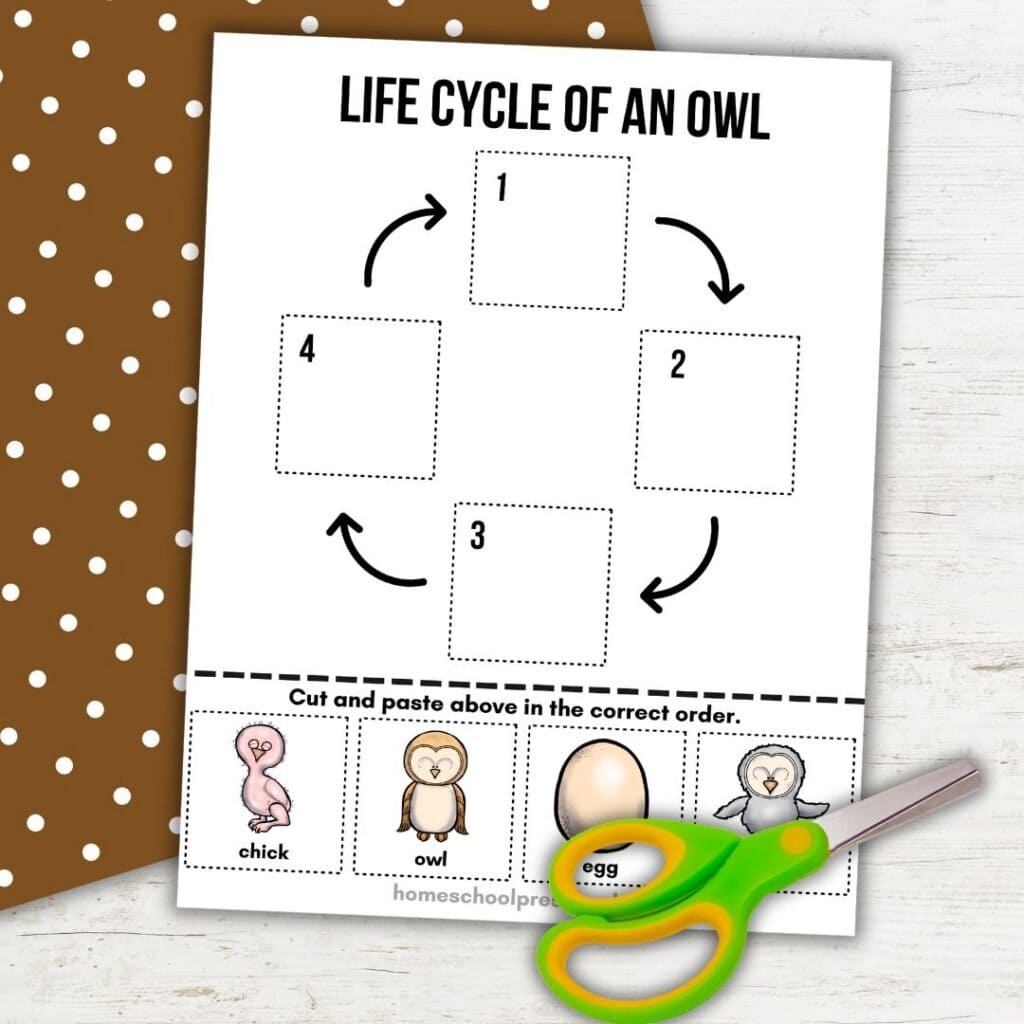
Have your preschooler cut along the dotted lines to separate the egg, chick, owlet, and adult owl pictures.
3. Put the Stages in Order
Before reaching for the glue, have your child arrange the pictures in order from egg to adult owl. Encourage them to think about what happens first and what comes next.
4. Glue the Pictures in Place
Once the pictures are in the correct order, glue each one into its numbered space to complete the owl life cycle.
And that’s really all you need to do. You don’t have to turn one worksheet into a full science lesson. Talk about the pictures, complete the activity, and maybe read an owl book together. That’s enough.
Easy Ways to Extend the Activity
If you want to spend a little more time exploring owls, add one simple activity after completing the worksheet. You don’t need to do them all. Choose the one that fits naturally into your day.
Read an Owl Book
Pair the worksheet with a picture book about owls. Reading together is an easy way to learn a little more about where owls live, what they eat, and what makes them unique.
Act Out the Life Cycle
Get up and move through the stages together. Pretend to curl up inside an egg, hatch as a tiny chick, grow into an owlet, and finally spread your wings like an adult owl.
Make an Owl Craft
Finish your owl study with a simple owl craft. Cutting, gluing, painting, or assembling an owl gives preschoolers a hands-on activity to pair with what they learned about the life cycle.
Grab the Owl Life Cycle Worksheet
Grab the printable owl life cycle worksheet to use with your next owl, bird, or woodland animal theme. You’ll receive both the color and black-and-white versions so you can choose the one that works best for your preschooler.

Explore the Owl Life Cycle Together
Preschool science doesn’t have to be complicated to be meaningful. A simple activity like this gives kids a chance to slow down, notice how an animal changes as it grows, and ask questions along the way.
Use the worksheet on its own when you need something quick, or pair it with a favorite owl book or hands-on activity. Either way, you’ve created an easy opportunity to explore science together.

Tara is the brains behind Homeschool Preschool, where her journey from preschool and public school teacher to homeschooling mom of three fuels her passion for early childhood education. With a blend of expertise and firsthand experience, Tara’s writings offer practical tips and engaging resources to support families in creating meaningful learning adventures at home.