
Hands-On Symmetry Activity
This hands-on symmetry activity for preschoolers uses LEGO bricks and a baseplate to explore one of the most foundational early math concepts through play. If you are looking for hands-on preschool math ideas that feel more like building than learning, this one is a perfect fit for home or classroom use with kids ages 3 to 5.
All you need is a baseplate, a handful of colorful bricks, and about 15 minutes. I love this activity because it works with materials most families already have, and it can be repeated again and again with a completely different design each time.

What Is a LEGO Symmetry Activity for Preschoolers?
A LEGO symmetry activity uses a baseplate divided into two halves to teach young children how to mirror a pattern. One side is built by the adult or child, and the child recreates the same design on the opposite side, matching color, shape, and placement. It introduces early math concepts through hands-on play.
Supplies
- LEGO baseplate
- LEGO bricks in a variety of colors and sizes

What You’ll Do
Setting up this symmetry activity takes just a couple of minutes. Here is how to do it:
Place the LEGO baseplate on a flat surface.
Divide the baseplate in half vertically or horizontally with a row of LEGO bricks.

Build a simple pattern on one side of the baseplate. Keep the design clear and uncluttered.

Invite your child to observe the pattern closely.
Encourage your child to recreate the same pattern on the opposite side of the line, matching color, shape, and placement.

Compare both sides together to check for symmetry.

Clear the baseplate and repeat with a new design, slowly increasing the difficulty.

What Kids Learn From This Acivity
This activity does a lot more than keep little hands busy. Here is a look at the skills your child builds every time you bring out the baseplate:
Early Math Skills Symmetry is a foundational math concept, and this activity introduces it in the most natural way possible. As your child works to mirror a pattern, they are developing spatial awareness and beginning to understand how shapes and positions relate to each other.
Visual Discrimination Matching bricks by color, size, and placement requires your child to look closely and think carefully. This kind of focused observation strengthens the visual discrimination skills that support early reading and math down the road.
Problem-Solving and Logical Thinking When a brick does not look quite right, your child has to figure out why and fix it. That process of noticing, adjusting, and trying again builds the kind of logical thinking that carries into every area of learning.
Fine Motor Development Picking up and placing individual bricks with precision is a genuine fine motor workout. The more your child practices, the stronger those small hand muscles become, which supports writing readiness as well.
Focus and Patience This activity naturally slows children down. Observing a pattern, planning a response, and self-correcting along the way all require sustained attention, which is a skill preschoolers are actively developing and one that grows stronger every time they practice it.

Tips for Making It Work at Home
★ Start with just two or three bricks on one side before increasing complexity. Simple designs build confidence faster than complicated ones.
★ If your child is newer to LEGO bricks, stick to one color at first so they can focus on shape and placement before adding the challenge of color matching.
★ Try both vertical and horizontal dividing lines as your child gets comfortable. Switching the orientation keeps the activity fresh and introduces a new layer of spatial thinking.
★ There is no wrong way to reset. Clear the baseplate, hand it back, and let your child build the starting pattern for you to mirror. Switching roles adds excitement and extends the activity naturally.

This symmetry activity is a simple setup that delivers a surprising amount of learning. A baseplate and a handful of bricks are all you need. In just a few minutes, your preschooler gets a genuine introduction to early math. These are concepts that will carry into kindergarten and beyond. The next time you need a hands-on activity, pull out the LEGO bin. This one feels like play and works like a lesson.
LEGO Symmetry Activity
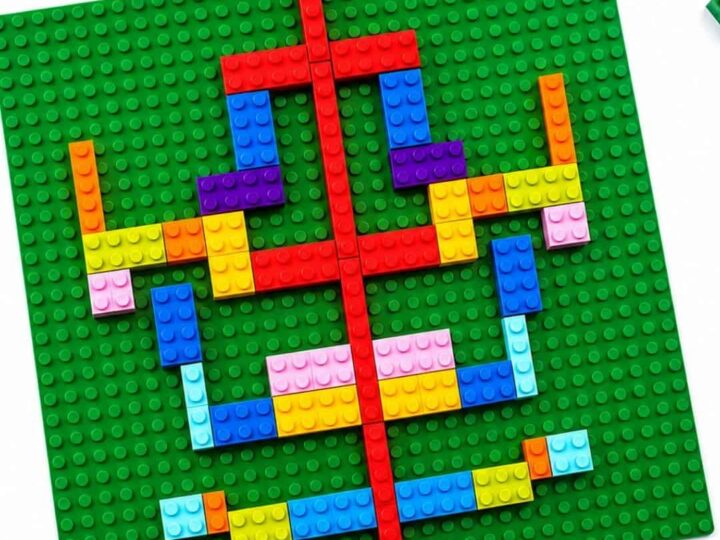
Use a LEGO baseplate and colorful bricks to introduce preschoolers to symmetry through this simple, hands-on math activity.
Materials
- LEGO baseplate
- LEGO bricks in a variety of colors and sizes
Instructions
- Place the LEGO baseplate on a flat surface.
- Divide the baseplate in half vertically or horizontally with a row of LEGO bricks.
- Build a simple pattern on one side of the baseplate. Keep the design clear and uncluttered.
- Invite your child to observe the pattern closely.
- Encourage your child to recreate the same pattern on the opposite side of the line, matching color, shape, and placement.
- Compare both sides together to check for symmetry.
- Clear the baseplate and repeat with a new design, slowly increasing the difficulty.

Tara is the brains behind Homeschool Preschool, where her journey from preschool and public school teacher to homeschooling mom of three fuels her passion for early childhood education. With a blend of expertise and firsthand experience, Tara’s writings offer practical tips and engaging resources to support families in creating meaningful learning adventures at home.


